Top Ad 728x90

Saturday, August 22, 2026

BREAKING: National emergency declared – Trump called in after…See more

by

 By / July 15, 2026

Reports of multiple scientists connected to U.S. aerospace and defense programs who have died or gone missing since 2022 have drawn new attention following action by congressional investigators, though authorities have not confirmed any link between the cases.

The House Oversight Committee on Monday requested information from several federal agencies regarding the deaths and disappearances of at least 11 researchers with ties to organizations such as NASA and private companies including SpaceX and Blue Origin.

Committee Chairman James Comer and Rep. Eric Burlison sent letters to Kash Patel, Energy Secretary Chris Wright, Defense Secretary Pete Hegseth, and NASA Administrator Jared Isaacman, requesting staff-level briefings by April 27, Fortune magazine reported.

“If the reports are accurate, these deaths and disappearances may represent a grave threat to U.S. national security and to U.S. personnel with access to scientific secrets,” the letters read.

On Monday, Comer, a Kentucky Republican, said he did not believe the deaths were a coincidence. “Once you see the facts, it would suggest that something sinister could be happening and it would be a national security concern,” Comer said.

He added he and Burlison were looking to “see if we can put it together and find any missing links to try to solve what’s going on here. Because it’s very unlikely that this is a coincidence. Congress is very concerned about this. Our committee is making this one of our priorities now because we view this as a national security threat.”

The White House officially acknowledged the pattern on April 15, when press secretary Karoline Leavitt was directly asked about it during a briefing. “If true, of course, that’s definitely something I think this government and administration would deem worth looking into,” she responded.

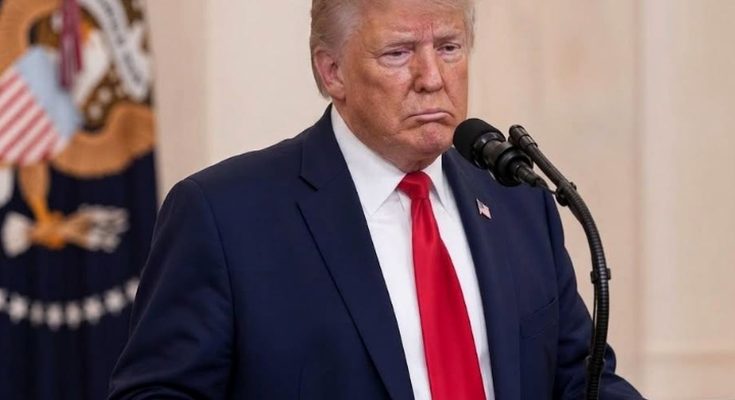
Later that day, President Trump told reporters, “I don’t know. Hopefully, coincidence, whatever you want to call it. But some of them were very important people,” adding he would have answers within “the next week and a half.” He added: “I just left a meeting on that subject, so pretty serious stuff.”

In a post on X later in the week, Leavitt confirmed the administration “is actively working with all relevant agencies and the FBI to holistically review all of the cases together and identify any potential commonalities that may exist,” adding, “No stone will be unturned.”

On Sunday, Patel confirmed that the bureau is investigating, telling Fox News’ Maria Bartiromo: We’re going to look for connections on whether there are connections to classified access, access to classified information, and or foreign actors.”

Patel then said, “If there’s any connections that lead to nefarious conduct or conspiracy, this FBI will make the appropriate arrest.”

In a statement to Fortune, the FBI added it “is spearheading the effort to look for connections into the missing and deceased scientists. We are working with the Department of Energy, Department of War, and with our state and local law enforcement partners to find answers.”

NASA referred Fortune to its first statement on the matter, which was posted to the X platform: “NASA is coordinating and cooperating with the relevant agencies in relation to the missing scientists. At this time, nothing related to NASA indicates a national security threat. The agency is committed to transparency and will provide more information as able.”

Governor Walz Confirms Focus on Third Term, Not Senate Run

by


Ten minutes ago in Minnesota, it was officially confirmed that Governor Tim Walz has reached an important milestone in his career. The announcement immediately attracted attention across the state, sparking conversations among political leaders, community organizations, and residents. Walz, who has long been recognized for his steady leadership and dedication to public service, now adds another achievement to a career defined by commitment and responsibility. Over the years, Governor Walz has built his reputation on core issues such as education, healthcare, and economic stability.

Supporters point to his consistent focus on Minnesota families and his ability to address challenges with practical solutions. They see this confirmation as proof of the trust he has earned and the confidence people continue to place in his leadership. Many community members have praised not only his policies but also his approachable style, which they feel reflects genuine care for the people he serves.

Political analysts note that this new development could have lasting implications for Minnesota’s future. Walz has often been seen as a leader who values consensus and constructive dialogue, even when working across party lines. This confirmation is expected to strengthen his influence further, possibly expanding his profile on the national stage. Observers suggest that his record of pragmatic decision-making could open the door to broader opportunities in shaping policy beyond state borders.

For Minnesotans, the news marks both recognition of past achievements and the beginning of a new chapter. Residents are now watching closely to see how this moment will guide the state’s direction and what it could mean for Walz’s political journey. Whether through continued service in state leadership or potential roles with a wider impact, his confirmation stands as a reminder of the values of dedication, perseverance, and trust in public office.

I woke after surgery to an empty hospital room and asked the nurse, “Where are my children?” She hesitated. “They were here during your surgery, Mrs. Davis.” I stared at the three empty chairs. “Then where are they now?” She lowered her eyes. “They left about an hour ago.” The anesthesia fog vanished instantly. “Why?” The nurse looked uncomfortable before answering, “They said the parking was getting too expensive.”

by


PART 1: THE EMPTY CHAIRS

When I woke after heart surgery, the fluorescent lights above my bed were humming softly and my chest ached with every breath. Before the procedure, my three adult children had promised to stay until I woke, yet when I turned toward the chairs beside my bed, every one of them was empty.

David had promised to take the day off from his accounting firm, Sarah said she would bring flowers, and Michael had reluctantly rearranged his sales calls. I tried to convince myself they had simply stepped outside, but when a nurse entered to check my monitors, I immediately asked about them.

“My children. Where are they?”

Her expression changed before she answered.

Discover more
Bathroom
Babies & Toddlers
Pregnancy & Maternity

“They were here earlier.”

“And now?”

“They left about an hour ago.”

I stared at her, still foggy from the anesthesia.

“Why?”

She hesitated, clearly uncomfortable.

“Someone at the front desk heard them say the parking fees were becoming too expensive. They said they’d check on you later.”

Discover more
Special Occasions
Child Care
Pregnant

For several seconds, I thought I had misunderstood her. I was sixty-four and had just undergone surgery for a blocked artery, yet my children had decided that another hour of hospital parking mattered more than waiting for their mother to wake up.

I began crying before I could stop myself, and the nurse quietly handed me tissues while asking whether there was anyone else she could contact. I shook my head because after years of raising three children and constantly being there whenever they needed me, I suddenly couldn’t think of anyone who would come simply because I needed them.

A few minutes later, a tall man in a dark tailored suit appeared in the doorway carrying a leather briefcase. He looked vaguely familiar, but I couldn’t place him until he introduced himself.

“Mrs. Davis, my name is Malcolm Chen. You probably don’t remember me.”

I studied his face but found nothing.

Then he smiled faintly.

“You bought my lunch every day when I was in third grade.”

The memory returned slowly. When I was sixteen, I had worked as a teacher’s aide at Franklin Elementary, where a thin, quiet boy regularly sat alone in the cafeteria pretending he wasn’t hungry because his family couldn’t afford lunch.

“Little Malcolm?”

His eyes immediately filled with emotion.

“You remember.”

I did. I remembered slipping him lunch tickets and pretending the cafeteria had extra food so he could eat without feeling embarrassed, something I’d considered such a small act that I hadn’t thought about it in decades.

When the nurse reminded Malcolm that visiting hours were restricted, he calmly explained who he was.

“I own this hospital.”

I stared at him in disbelief.

“You own this hospital?”

“Four, actually.”

Malcolm sat beside me and removed an old yellow lunch card from his briefcase. The paper was faded and worn around the edges, but he’d preserved it for more than forty years.

“I kept this.”

“Why?”

“Because when I felt like nobody cared about me, this reminded me that one person had.”

He explained that he’d eventually been adopted, become a pediatrician, moved into hospital administration, and built a healthcare network. He had also funded programs that provided meals for children in hospitals and low-income schools, all because he had never forgotten what it felt like to be the hungry child nobody noticed.

“Because of you.”

I shook my head.

“Because of one school lunch?”

“Because kindness changes people.”

For the first time since waking from surgery, I felt less alone. But when Malcolm noticed the three empty chairs beside my bed and asked why nobody was with me, the humiliation returned.

“My children left. They said parking was too expensive.”

Malcolm became quiet.

“Well, then I’m glad I found you today.”

He stayed through dinner, and as we talked, I discovered that he already knew much of my history. He knew I’d raised my children after my divorce, worked multiple jobs to support them, and continued helping them financially even after they were adults, including covering debts and giving them money whenever they struggled.

Eventually, Malcolm asked a question I didn’t want to answer.

“Adrienne, when was the last time one of them came to visit you before today?”

“I don’t know.”

“Six months.”

I looked away, automatically reaching for the excuse I’d used for years.

“They’re busy.”

“I know you want to believe that.”

Malcolm reached into his briefcase and placed a manila folder on my bed. His expression had changed, and I immediately understood that whatever was inside had nothing to do with the childhood memories that had brought him there.

“But there are some things I think you need to know.”

“What is that?”

“Information I discovered while trying to locate you.”

He opened the folder and looked directly at me.

“Three weeks ago, David met with an elder-law attorney.”

I frowned.

“Why?”

Malcolm paused before giving me the answer.

“He asked about having an elderly parent declared mentally incompetent.”

I stared at him as the meaning slowly settled in. My children abandoning me after heart surgery because of parking fees suddenly wasn’t the most frightening thing I had learned about them that day.

PART 2: THE PLAN THEY MADE BEHIND MY BACK

I stared at Malcolm, hoping there was some reasonable explanation for what he’d just told me. David had always presented himself as the responsible one in the family, yet three weeks before my surgery, he’d consulted an elder-law attorney about having me declared mentally incompetent.

Malcolm opened the folder and showed me the attorney’s correspondence. David had specifically asked how quickly an elderly parent could be declared incompetent if she was being “too generous” and making financial decisions that could reduce the family’s inheritance.

“He thinks my generosity means I’m losing my mind?”

Malcolm didn’t answer immediately. Instead, he showed me messages Sarah had sent to a friend complaining that I’d donated five hundred dollars to charity while she was struggling with debt, including one sentence that made my hands begin to shake.

“David thinks we need to do something before Mom gives everything away.”

There was more. David’s accounting firm had accessed my credit report, and beside my regular donations to an animal shelter, someone had written that the charitable spending was unnecessary and could be redirected.

“He’s been monitoring my donations.”

“There’s something else.”

Malcolm explained that hospital security had captured a conversation between my children in the parking lot. I didn’t want to hear them discussing me behind my back, but after everything I’d already discovered, I knew pretending ignorance would only protect them.

David’s voice came first.

“She’s fine. The procedure went well. There’s no reason to sit around paying twenty dollars for parking.”

Sarah sounded less certain.

“I still feel strange leaving her.”

Michael laughed.

“She’s always alone. She won’t notice.”

Those words hurt enough, but the conversation quickly became worse. David explained that simply showing up for my surgery would help them establish a history of being concerned about me, something they could later use when they wanted greater control over my care.

“A couple of years. Maybe sooner. We just need to establish a pattern that she’s making irresponsible financial decisions.”

Michael asked the obvious question.

“Like giving money to charities?”

“Exactly.”

Sarah reminded him that I wasn’t confused, only generous.

“Generous with our inheritance.”

I stopped thinking of the money as soon as I heard those words. My children had already mentally converted my house, pension, and savings into property that belonged to them, which meant every dollar I spent according to my own wishes had become something I was supposedly taking away from their future.

The recording continued as they discussed portraying my generosity as early dementia so they could eventually gain control over my finances. When it ended, I sat silently against the hospital pillow, realizing that the children I’d defended for years had been quietly preparing to take away my independence.

“They left because of this?”

“Not exactly.”

I looked at Malcolm.

“What could possibly be worse?”

“They had another appointment this afternoon.”

“With whom?”

“Another attorney.”

Malcolm explained that parking wasn’t the real reason they’d disappeared after my operation. While I was recovering from heart surgery, my children had left the hospital to attend a meeting about gaining control over my affairs.

For years, I’d excused their behavior because they had careers, families, bills, and problems of their own. Sitting there with Malcolm’s evidence spread across my bed, every excuse I’d made for them suddenly sounded painfully naive.

“What happens now?”“That depends entirely on what you want.”

Malcolm opened another folder and showed me the letterhead of an organization called the Adrienne Davis Foundation. Five years earlier, he’d created the charity to fund school meal programs and support older adults who had spent their lives helping others, and more than ten thousand children had already received meals through its programs.

“You named a foundation after me?”

“I hoped I would eventually find you and ask permission.”

“You did all this because I bought you lunch?”

“Because you showed me what kindness looked like.”

Then Malcolm slid another document toward me.

“I’d like you to become executive director.”

I laughed because I assumed he was joking, but he wasn’t. The position paid $125,000 a year, with professional staff handling administration and finances while I helped choose programs, guide the foundation’s mission, and decide which communities needed support.

More importantly, holding an executive position would make it extremely difficult for my children to argue that I was mentally incapable of managing my own affairs. Malcolm wasn’t merely offering me employment; he was giving me a way to demonstrate exactly how independent and capable I still was.

Then he showed me photographs of a beautiful single-story home in Sunset Gardens, a quiet community for independent older adults. The house was completely paid for, and support services would be available if I ever genuinely needed them.

“You bought this?”

“For you, if you want it.”

“Malcolm, I can’t accept a house.”

“Why?”

“Because it’s too much.”

He looked directly at me.

“When you fed me for two years, did you expect anything in return?”

“No.”

“Then why can’t you believe I want to help you the same way?”

Before I could answer, a nurse appeared at the doorway and told me my three children had returned. My heart monitor immediately quickened, but this time I wasn’t the same mother they had abandoned a few hours earlier.

“Mrs. Davis, your three children are here.”

Malcolm offered to stay, but I shook my head.

“Wait outside.”

He gathered the documents and stood.

“If you need me, call.”

Seconds later, I heard David, Sarah, and Michael approaching my room. They thought they were returning to a frightened mother recovering from heart surgery, but they had no idea I already knew exactly what they had been planning.

Top Ad 728x90